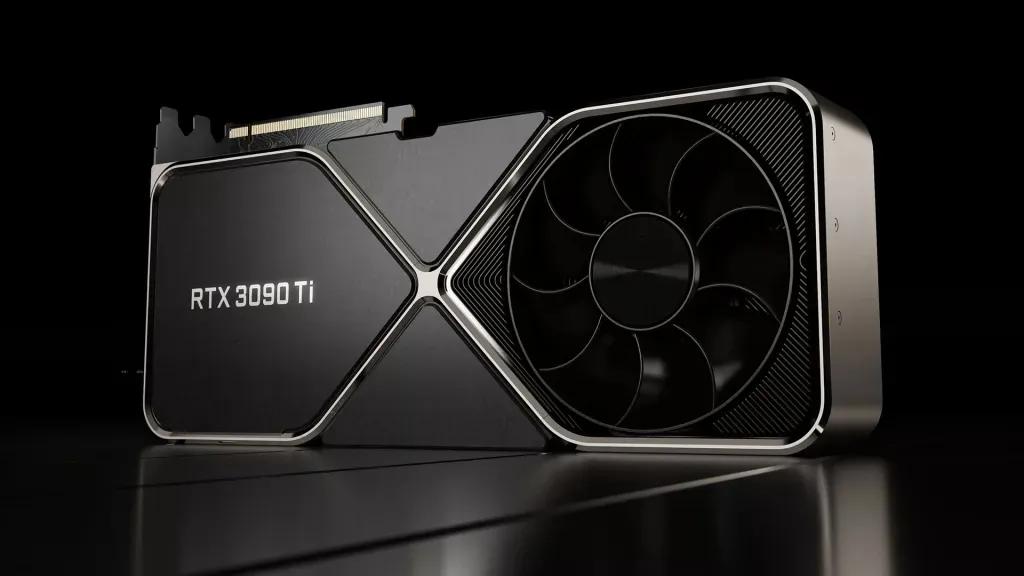
GPU stands for graphics processing unit. You’ll also see GPUs commonly referred to as graphics cards or video cards. Every PC uses a GPU to render images, video and 2D or 3D animations for display. A GPU performs quick math calculations and frees up the CPU to do other things. Whereas a CPU uses a few cores focused on sequential serial processing, a GPU has thousands of smaller cores made for multi-tasking and is found in the best graphics cards for gaming.
- Integrated GPUs are located on a PC’s CPU and share memory with the CPU’s processor.
- Discrete GPUs live on their own card and have their own video memory (VRAM), so that the PC doesn’t have to use its RAM for graphics.
Bottom line: For best performance, opt for a discrete GPU.
Article continues belowMany graphics cards today run on GDDR SDRAM, which stands for graphics double data rate synchronous dynamic random access memory. Further variations, from worst to best performance, are: GDDR2, GDDR3, GDDR4, GDDR5, GDDR5X, GDDR6 and GDDR6X.
This article is part of the 3DTested Glossary.
Further reading:
