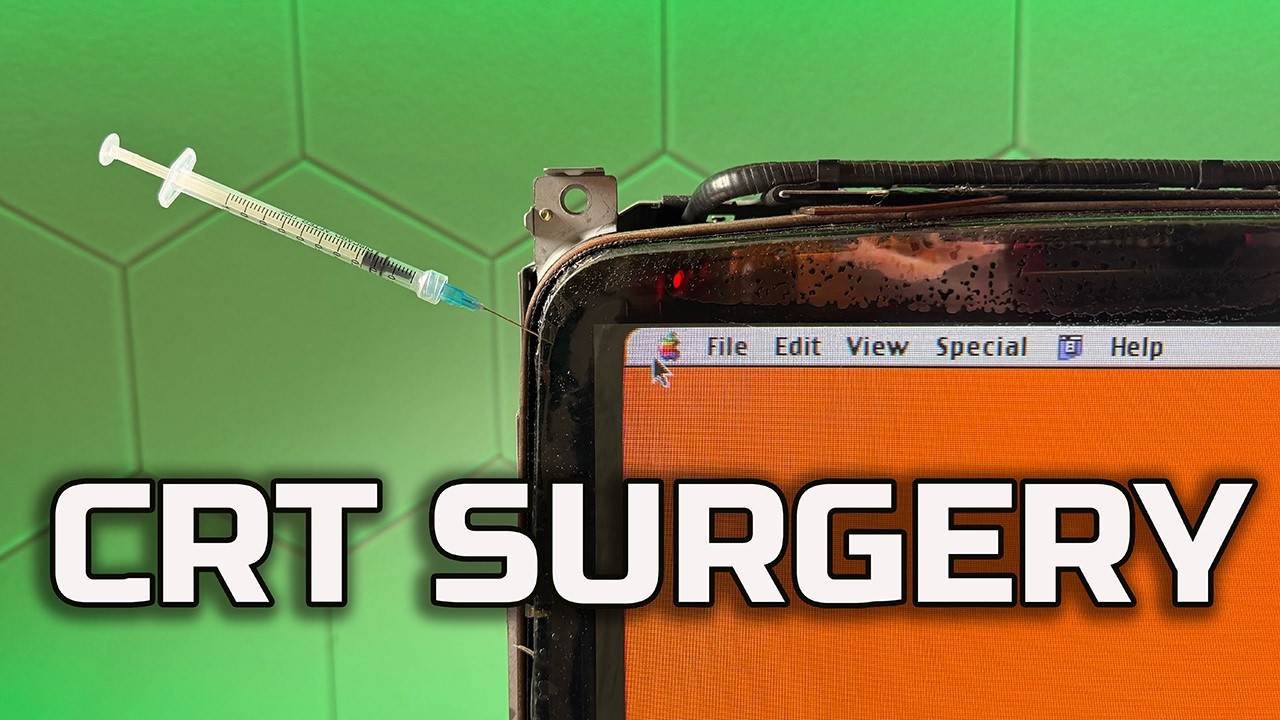
TechTuber Epictronics has shared a video documenting his attempts to fix a vintage 20-inch Trinitron CRT monitor suffering from cataracts by injecting UV resin. Spoiler alert: the exploration of a syringe, heat, UV, and patience-requiring method of fixing this old Apple-branded Sony monitor ended up being “a mega-successful repair.” Indeed, under normal lighting/magnification, as evidenced by before and after photos, the unsightly air pockets appear to have vanished.

We’d have to agree that spending time fixing a sample of the legendary Apple GDM‑20E01 is time well spent. Introduced in the mid-1990s, this was a premium, expansive, color display from the era, coveted by creatives (and others who saw it). It used a Sony Trinitron tube and supported resolutions up to 1,280 x 1,024 pixels.
This particular sample has maybe had a harder life than some. The TechTuber says it was actually “trash-picked… very smelly” and filled with spiders when he acquired it. Picking it out of a dumpster could put your back out, though. The GDM‑20E01 tips the scales at approximately 66 pounds (30kg).
Article continues below“A very nasty cataract issue.”
Epictronics notes that cataracts are a much more prevalent issue in monitors from the 70s, but we’ve already mentioned that Epictronics’ sample was rescued from the trash. This monitor, and many like it, have a thin layer of glass bonded to the CRT tube face. Unfortunately, the protective layer can delaminate over time, which isn’t good for the viewer, with lighter patches often creeping in from the edges, progressing after numerous heat and cold cycles, aging, and weathering take their toll on the bonding adhesive.
Pondering over the scale of the problem for this GDM‑20E01, Epictronics says that while a traditional fix might involve using a heat gun to completely remove the front laminated layer, it is a “risky process than can go wrong, horribly wrong.” So, for this Trinitron, with cataracts still only creeping in from the sides, a less dramatic fix was going to be tested. The TechTuber decided to use a syringe plus clear UV-curable resin to determine if the unsightly air gaps could be flooded. Anyways, Epictronics insisted that this smaller-scale fix won’t hinder a fuller solution at a later date.


After finishing injecting the major air-gap/bubble-affected region in the video and replacing the screen bezel, the TechTuber said, “That was a mega-successful repair.” From start to finish, his technique progressed, settling on a periodic syringe needle-heating technique so the resin flowed readily into the gaps. Magnified close-ups show the cured resin still contained very small air bubbles, but they weren’t observable by the naked eye from a normal sitting distance. The image gallery showing before and after pics pretty much confirms the success of the CRT fixing project.
After the monitor section, Epictronics shifted his attention to the restoration of a contemporaneous Macintosh PowerPC 6100 base unit. The computer had several problems, like a faulty optical drive, among its issues. A DOS compatibility card with a 486 DX2-66 processor was also lined up to expand the capabilities of the pioneering PowerPC architecture machine.
Warning: CRT electronics can remain dangerous, even after the device has been powered off for some time.

Follow 3DTested on Google News, or add us as a preferred source, to get our latest news, analysis, & reviews in your feeds.