Mere weeks after successfully using a ZX Spectrum to fly a simulated spacecraft, space enthusiast and YouTuber Scott Manley have successfully “landed” on the moon using the home computer from the 1980s. Of course, Manley didn’t have an actual lunar lander with him, so he used the 2015 spaceflight simulator Kerbal Space Program, using a ZX Spectrum to control the spacecraft. To those not acquainted with The Spectrum, it’s a personal machine produced by the UK firm Sinclair Research, debuted in 1982.
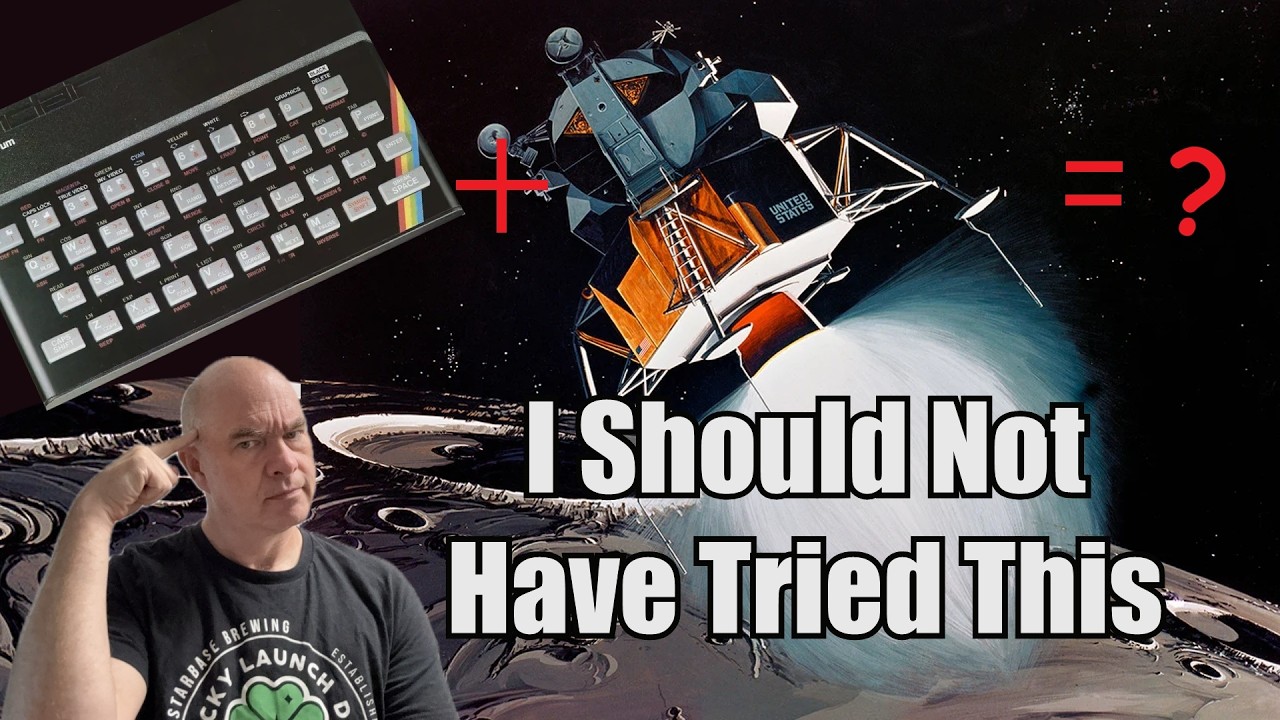
Consequently, developers needed to be highly resourceful during the coding process, making sure they utilized minimal data to accomplish their objectives. Even though the ZX Spectrum had so much more memory than the original AGC, that is still a challenge that Manley had to go through, programming the virtual PC with the variables it needed to operate the virtual Vessel and calculating the orientation and thrust necessary to navigate and touch down on the moon.
Article continues belowThe difficulty persists beyond that, however, as he also had to virtually link the ZX Spectrum with the simulation. Because the hardware is quite aged, it lacks contemporary I/O interfaces such as USB. Fortunately, Sinclair Research additionally manufactured Interface 1, the dedicated storage solution for the ZX Spectrum, featuring an RS232 Serial port, enabling the ZX Spectrum to communicate with a Windows PC. But because Kerbal Space Program does not support Serial input, he had to install the Kerbal RPC mod, which lets users control the ship remotely using Python or whatever language you like.
With everything set up, Scott fires up the program, and his virtual lunar lander starts to slowly descend. As the spacecraft approached the surface of the moon, Manley talked about how slow the system is, saying that it sometimes had a lag of about two seconds. Nevertheless, he also said that the AGC “ran on a 2-second cycle, where it would compute some values at that rate and it would be able to land on the moon like that.”
NASA is planning to get back on the moon before the end of the decade, and it will certainly use hardware that’s 100,000 times more powerful than the ones that first landed there nearly 60 years ago. Nevertheless, that shouldn't diminish the brilliance of the researchers and technicians who participated in the initial project and managed to land Neil Armstrong using computing systems that possessed less capability than the gadget you utilize to Power up the smartphone you're holding in your palm today.

Follow 3DTested on Google News, or add us as a preferred source, to obtain our newest reports, breakdowns, & appraisals via your feeds.