Unless you're a low-level developer yourself, you probably don't realize how complicated emulator development is. To be frank, the RPCS3 emulator for PlayStation 3 is probably one of the most tightly-optimized pieces of software being actively developed today. Case in point: the project's official X account just posted a screenshot of the app running the PlayStation 3 version of Minecraft and achieving some 1558.84 FPS on the title screen.
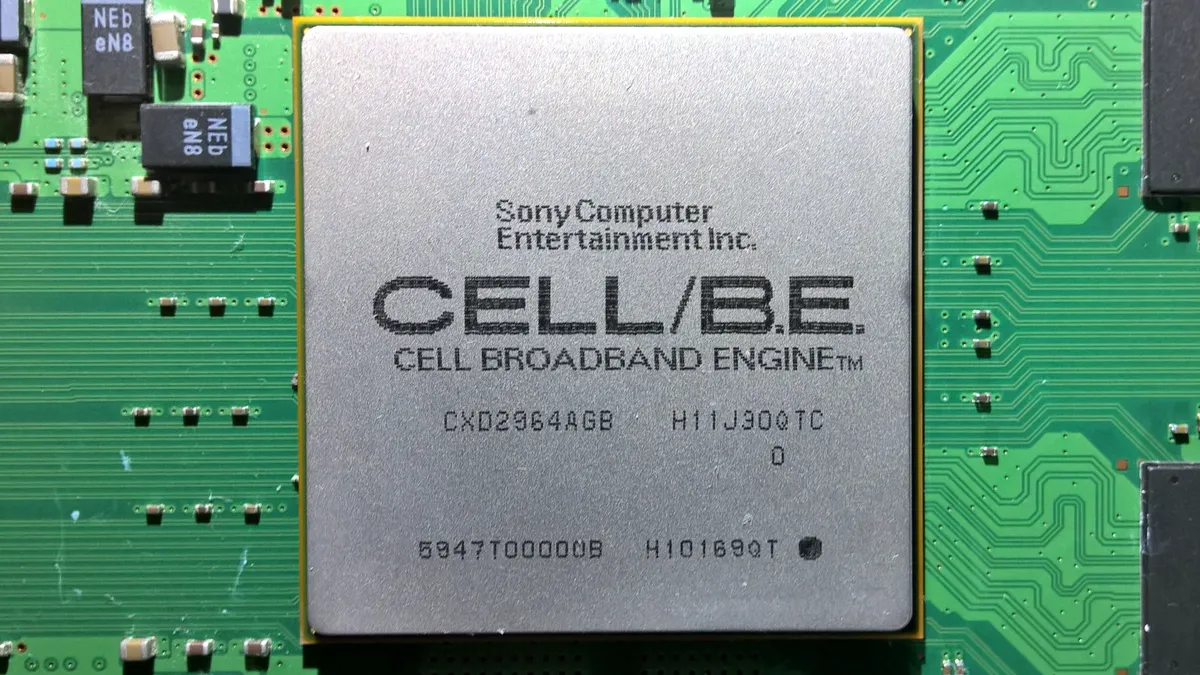
As a refresher, the PlayStation 3 was released in November 2006. It's a game console that features a graphics processor, the Reality Synthesizer or RSX, that is a very close relation (though not identical to) an NVIDIA GeForce 7800 GTX, albeit with half the memory bandwidth and a few other tweaks. That GPU is mated to the IBM-Sony-Toshiba Cell Broadband Engine, a single-core PowerPC CPU with eight "Synergistic Processing Elements" (SPEs) hanging off the back of it, though only seven are functional in the final design.
Article continues belowRPCS3 is so optimised that it can pull off over than 1500 FPS on Minecraft PS3 Edition's menu.This means a frame is rendered in average within 0.00064 seconds (0.64 milliseconds) while emulating the PS3 system, translating binary code and rendering the result on each frame. Https://t.co/AL7RwunHnU pic.twitter.com/MbaAvMgyZ5 March 8, 2026
So, a single-core CPU with SIMD and an old GPU. Easy to emulate on modern hardware, right? No. The design of the PS3 is legendarily idiosyncratic. The RSX and the Cell communicate with each other over a proprietary bus called FlexIO, which is extremely fast—sometimes. For certain transfers, it can be as slow as 16 megabytes/second. Complicating matters, the latency of a FlexIO operation varies depending on whether you're reading or writing, and which device you're doing either to and from. This matters because software is programmed to expect a certain latency, and screwing it up could crash a program or cause other unexpected behavior.
Moreover, the Cell's SPEs are not like a modern CPU's SIMD units. They're somewhere between that and discrete CPU cores, with their own 256K of "Local Storage" and their own memory controller that works independently of the "SPU", which is the actual functional unit inside the SPE. The SPUs can only work on data resident in their own Local Store, but loading data in and out of the Local Store has to be done manually by the developer by sending commands to the Memory Fabric Controller inside each of the six usable SPEs (one is reserved for OS functions).
Worse than that, the SPUs are spectacularly weird processors. They can only work with just a few data types, and they do things that modern processors simply aren't capable of without considerable work shuffling bits around; a single instruction explodes into dozens. In particular, the SPUs perform a lot of 128-bit atomic operations that require tons of complex, tightly-optimized code to emulate both quickly and accurately on x86-64 CPUs, and that's to say nothing of trying to perform said emulation with a "close-enough" latency. Recently-added instructions as part of the AVX-512 ISA extensions help with this, but don't fully resolve it.
All this to say that yes, it's Minecraft's title screen. It's Minecraft's title screen coming out of an application that's emulating all this arcane PlayStation 3 hardware within less than two-thirds of a millisecond (0.64ms). I wasn't kidding when I said RPCS3 is one of the most heavily optimized pieces of software on the planet. The recompiler is doing things normal developers would stare at in befuddlement for speed.
Still, the replies to the Twitter post are largely unappreciative. It's easy to understand how they feel; when a game from 2009 won't run smoothly on your 2026 hardware, it feels ridiculous—although we have to point out that actual 2026 hardware generally will run everything just fine; even God of War III and Metal Gear Solid 4 are mostly playable on the best CPUs for gaming.
The simple reality is that the PS3 was a beautiful disaster of a machine, and the way it does things is just fundamentally different from the way we do things in x86-land. The fact that the app exists at all is a testament to the hard work put in by kd-11, Nekotekina, Whatcookie, and the dozens upon dozens of other contributors to the open-source project. Our very humble hats off to the team for donating countless hours of their free time to push the state of PS3 game preservation ever forward.

Follow 3DTested on Google News, or add us as a preferred source, to get our latest news, analysis, & reviews in your feeds.