Oracle and OpenAI's Abilene expansion saga detailed: 600MW expansion gets scrapped, as larger 4.5GW agreement remains on track

Oracle and OpenAI dropped plans to expand their flagship Stargate campus in Abilene, Texas, beyond its committed 1.2-gigawatt build earlier this month, after financing negotiations failed and winter weather disrupted parts of the liquid-cooling infrastructure.
Bloomberg initially reported on the decision on March 6, Reuters followed, and within hours, both outlets and the social accounts aggregating them had reduced a multi-factor infrastructure decision to a single word: "canceled." Oracle posted a rebuttal on X.com early Monday morning, calling all coverage "false and incorrect,” and by March 9, a screenshot purportedly from an OpenAI employee was circulating on social media, appearing to confirm the original reporting. It has since been confirmed that the LinkedIn post was fake, however. And digging deeper into the story yields even more intriguing wrinkles.
Abilene's expansion lease
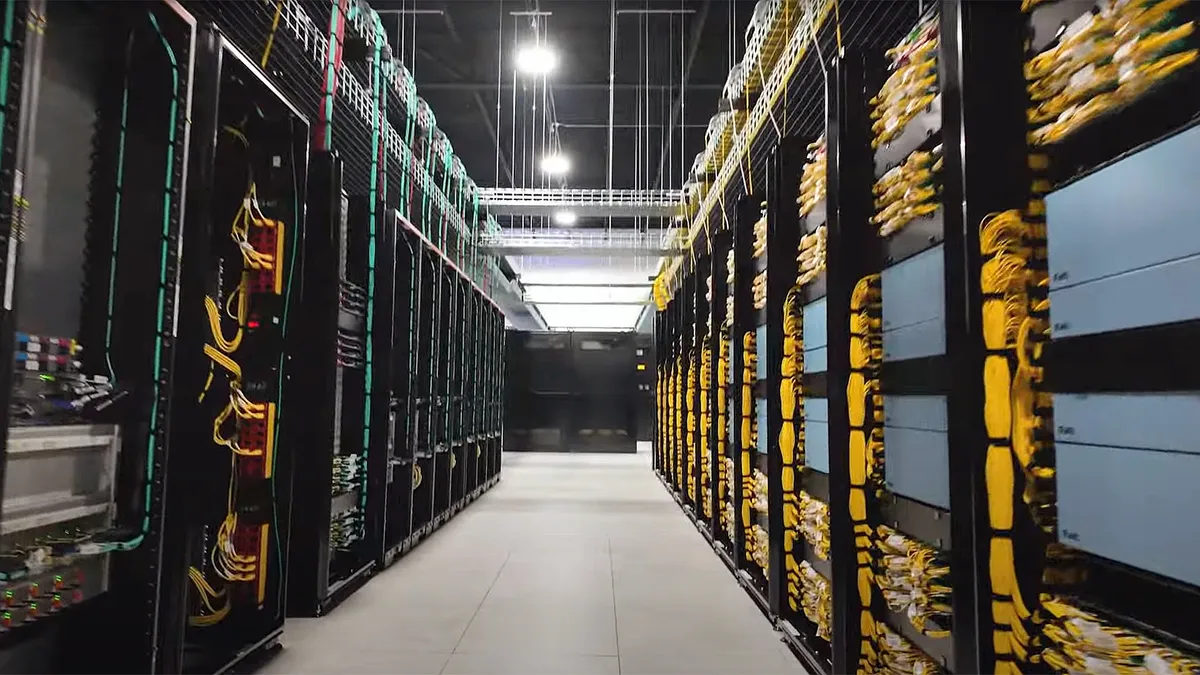
What needs to be made clear is that the existing Abilene campus is unaffected. Oracle has confirmed that its 1,000-acre, eight-building facility (developed by Crusoe on Lancium's Clean Campus) continues to operate. Two buildings are already running training and inference workloads on Nvidia GB200 Blackwell racks, and the remaining six are scheduled for completion by mid-2026, bringing total capacity to roughly 1.2 gigawatts.
Article continues belowWhat did in fact collapse was a separate, never-finalized expansion lease that would have pushed the site toward 2 gigawatts. OpenAI's compute scaling executive, Sachin Katti, said publicly the company "considered expanding it further" but chose to direct that capacity to other locations instead.
Financing difficulties and a multi-day winter weather outage that took several buildings offline by disrupting liquid cooling equipment drew most of the coverage. The Information also reported that power at the expansion site won't be ready for roughly a year — calling it the “real reason” OpenAI walked away from the expansion — and by the time it is, Nvidia's Vera Rubin architecture will be available.
Rubin delivers approximately ten times lower cost per token and five times better inference performance over Blackwell while requiring four times fewer GPUs for mixture-of-experts training; it is due to ship in the second half of 2026. OpenAI and Nvidia signed a letter of intent in September 2025 to deploy at least 10 gigawatts of Rubin-class systems. For OpenAI, building 600 megawatts of additional Blackwell capacity at a site where the grid won't be ready until after Rubin ships means paying for hardware that is a generation behind before the buildings are live — that just doesn’t make sense commercially.
Nvidia's GPU generations are turning over faster than power infrastructure can follow — Rubin is set to be superseded by an 'Ultra' style variant in 2027, with the very much under wraps Feynman coming in 2028. More details surrounding Nvidia's roadmap are expected at the upcoming GTC 2026 conference.
Oracle’s position is showing us how badly these provisioning timelines can diverge, with the company reportedly carrying more than $100 billion in debt to fund its Stargate commitments, with free cash flow now negative.
Oracle's rebuttal
Oracle's X post on March 9, which called reports about Abilene "false and incorrect," said Crusoe and Oracle are "operating in lockstep." It confirmed two buildings are fully operational, and stated that leasing for the broader 4.5-gigawatt commitment had been "completed." Unfortunately, none of these statements addresses whether the Abilene expansion lease was dropped, as Bloomberg and Reuters reported.
Bloomberg's Ed Ludlow clarified on X shortly after Oracle's post that the two companies "are not moving ahead with the planned expansion lease," while the broader 4.5-gigawatt agreement "remains on track, with additional projects announced, including a site near Detroit." Oracle opted to defend the bigger picture without engaging the specifics, leaving many unable to determine what was actually going on.
The company then came out again early Tuesday morning with a new post to X, stating that recent media reporting about its data centers “[reflects] a fundamental misunderstanding of how AI data centers are built and operated,” going on to add that the flagship Abilene site “remains on schedule…. Any claim that the planned capacity at this site is delayed is inaccurate.”
Shareholders have separately sued Oracle over disclosure claims related to the buildout, which helps explain why Oracle's communications team came out so hard against reporting it could have simply declined to address. The broader 4.5-gigawatt Oracle-OpenAI capacity agreement announced in July 2025 remains on track across multiple U.S. Sites, including campuses near Detroit and in Wisconsin.
Nvidia steps in
With the Abilene expansion space unoccupied, Crusoe began looking for a new tenant for the 600 megawatts of capacity OpenAI had walked away from. Bloomberg reported that Nvidia paid a $150 million deposit to Crusoe to secure that space and then approached Meta about taking the lease, specifically to prevent AMD Instinct hardware from landing where its own silicon was already deployed. But no deal between Meta and Crusoe has been confirmed.
If all this wasn’t already confusing enough, a screenshot then began circulating on social media, purportedly showing a LinkedIn post from a "Michael Su," described as an OpenAI or Crusoe affiliate with an insider account of the Abilene situation.
Tech writer Ed Zitron flagged it on Bluesky as "more than likely fake," citing a deepfake scanner result, a LinkedIn URL reading "michaelsermon" that did not match the name on the post, and no verifiable employment history for the person at any of the companies listed. No official channel authenticated the post, and the LinkedIn profile has since been removed.
The Abilene expansion, for now, appears to be cancelled, but the deal still reportedly remains on-track. With the AI data center buildout still in its early stages, expect more turbulence ahead. Nvidia's Jensen Huang believes that it could take up to 50 years to complete global 'AI factory' rollout, and if true, stories like Abilene will become ever more commonplace.