A collaboration between TU Wien and Cerabyte has established a new Guinness World Record for creating and reading the smallest ever QR codes. These QR codes feature 49nm pixels, making them less than half the size (37%) of the previous record holder. Furthermore, the codes are smaller than bacteria, says a press release from TU Wien, in comparison. Beyond the headlining world record achievement, these tiny QR codes will propel Cerabyte’s ceramic storage to even greater densities.
QR codes are everywhere in 2026, but these tiny world record holders are too small to be seen by the naked eye, or even read using an optical microscope. The TU Wein and Cerabyte team’s codes measure just 1.98 square micrometers. An electron microscope is required to read them.
This may not be the smallest QR code that it is possible to make, but, importantly, they hit the sweet spot between microscopic size, stability, and durability – according to the collaborative academic and commercial teams. Using this 49nm pixel size, “We have created a tiny, but stable and repeatedly readable QR code,” underlines Prof. Paul Mayrhofer from the Institute of Materials Science and Technology at TU Wien.
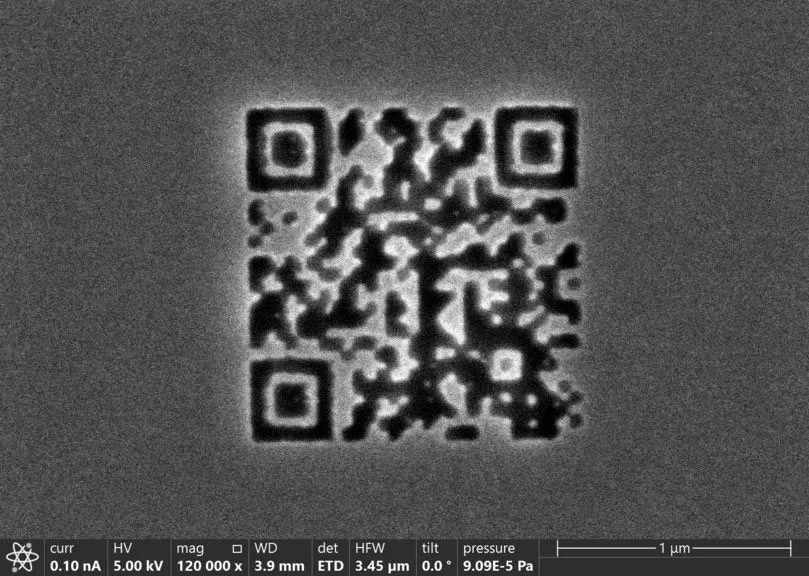
So, what kind of storage density can the world record-breaking advance deliver? Using the new tiniest QR code technology, it would be possible to produce a single-layer film at A4 size with over 2TB of storage.
The researchers and Cerabyte stress that the bacteria-sized QR codes retain several advantages compared to other storage technologies in widespread use today. Milled into a thin ceramic layer, it is claimed that the codes are “indefinitely” durable and require no energy or cooling to be maintained. We even see comparisons between ancient civilizations with stone tablets and trusting the jewels of the information age to advanced new ceramic storage media.
Now that this new QR code record has been verified, the teams are turning to other optimizations – writing speeds and scalable manufacturing. Interestingly, they will also work on developing more complex data structures beyond the confines of QR codes.
In the last year, Cerabyte has been in the 3DTested headlines for advances in storage density and durability. However, we don’t know the full implications of the new QR code world record on previous claims. There’s definitely some serious work being done behind the eye-catching headlines, though, with WD revealed as a key investor last May.

Follow 3DTested on Google News, or add us as a preferred source, to get our latest news, analysis, & reviews in your feeds.