Imagination Tech working on mainstream PC gaming with ‘ambitious graphics card and SoC design companies’ — shows off progress with DirectX 11 workloads
Demo DX11 video is just the start of this graphics chip maker's freshly inked long term roadmap embracing PCs.
Get 3DTested's best news and in-depth reviews, straight to your inbox.
You are now subscribed
Your newsletter sign-up was successful
The UK’s Imagination Technologies (IMG) is teasing its roadmap to “bring high‑performance, scalable, PowerVR graphics to desktop, workstation, and cloud environments.” We’ve seen and heard of a few false starts from IMG since the start of the 2020s, but this is the firm’s clearest messaging yet, with videos showcasing its work with Microsoft's DirectX, and stating that this work is “essential for mainstream PC gaming.”
IMG will be best known in PC circles, among folk of a certain vintage, for its pioneering PowerVR 3D graphics cards over three decades ago. It was also the graphical force behind the Sega Dreamcast (which launched in 1999). Since then IMG has spent focused on the mobile market, being a key Apple partner between 2007 and 2017.
In 2020 we noted IMG launching its B-Series GPU IP. That was a significant change of tack, after the disastrous mobile upset suddenly delivered by Apple. This IP would become the foundation for Chinese desktop GPU makers like Moore Threads and Innosilicon, despite their boasts of ‘domestic’ graphics tech.
Article continues belowIn 2022, as it celebrated its 30th anniversary, IMG would confirm that its tech was behind the aforementioned Chinese desktop cards. By this time there had been new generations from the Far East, with models like the 'double power' Fantasy 1 Type B card launching.
A year later Imagination’s IMG DXD, a DirectX‑capable GPU IP line explicitly aimed at desktop, laptop, and cloud gaming markets, were announced. Analysts at JPR thought that this marked IMG’s full hearted re-entry into the high-end PC market. DXD was its first real PC-ready architecture effort since Kryo in 2002.
Handling DirectX workloads with confidence
Today, IMG wanted to let graphics enthusiasts know it has reached a milestone in modern PC graphics support. From the few reviews and hands-on tests we’ve seen of Chinese PowerVR architecture cards, they have often been pretty poor at supporting PC gaming titles, especially newer games.
“We started adding hardware‑based support for DirectX to our GPUs with our last generation, D-Series,” IMG reminds viewers. “Below you can see it in action, in real silicon, handling complex DirectX 11 workloads with confidence.”
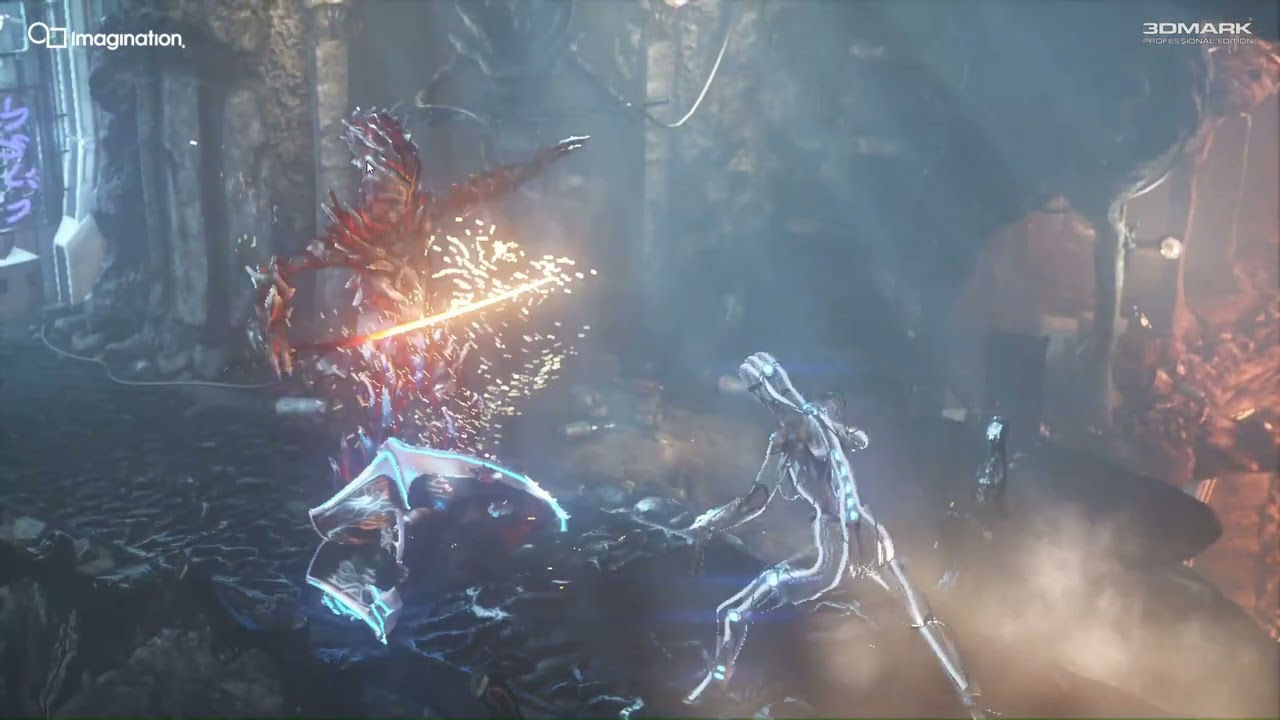
Get 3DTested's best news and in-depth reviews, straight to your inbox.
This is the same video referenced in the embedded LinkedIn post.
IMG indicates this demo evidences the beginning of its commitment to its long‑term roadmap embracing higher power devices like PCs. It asks that we stay tuned. Of course we will. But even if the demos get better and better, moving up through DX12, and adding other modern frills – it will probably be dismissed by the Crimson Desert devs…

Follow 3DTested on Google News, or add us as a preferred source, to get our latest news, analysis, & reviews in your feeds.

-
bit_user Reply
Yup.The article said:This IP would become the foundation for Chinese desktop GPU makers like Moore Threads and Innosilicon, despite their boasts of ‘domestic’ graphics tech.
So, what this means, in practice, is that the next generation (or the one after that) of Chinese dGPUs are going to be more competent implementations of the DX feature set. -
ekio Since Ngreedia spits at the face of the gamers who made them, competitors are very welcome.Reply -
DS426 Gamers desperately need a gaming GPU manufacturer that prioritizes PC gaming and not AI. I hope the next generation provides strong DX12 and Vulkan support, continuing to gain momentum and eventually fully breaking into Western PC gaming markets.Reply
It'll be interesting to see how they balance affordability with performance, i.e. How long it take from today to achieve very competitive perf-per-dollar? Chinese dGPU's in particular have to contend with tariffs in the U.S., but perhaps they'll start making inroads elsewhere for the time being.
Also, now that makes sense how Moore Threads was able to develop a gaming GPU so quickly. Makes a lot of sense to take existing IP and blast it out using China's powerhouse manufacturing. -
usertests I fear they won't escape the Chinese market.Reply
We could always use more competition. At the low end, the RTX 3050 6GB is unchallenged by other 75W cards. In the lower-middle, there's the B580 as the only real 12GB option around, unless Nvidia resurrects the RTX 3060 12GB. Maybe followed by the Lisuan LX 7G100 with 12 GB. -
bit_user Reply
Heh, good luck with that. Most (if not all) of the Chinese dGPU manufacturers seem to be trying to ride that money train, as well.DS426 said:Gamers desperately need a gaming GPU manufacturer that prioritizes PC gaming and not AI.
They will, if they're any good. Seriously, China loves to sell its products all over the world. These are gaming GPUs, not server/AI products. No reason to expect they won't make it outside of China, provided they hit a competitive price/performance point.Usertests said:I fear they won't escape the Chinese market.
Don't look for them to be the most power-efficient. I think they'll have an easier time competing on perf/$ than on perf/W.Usertests said:We could always use more competition. At the low end, the RTX 3050 6GB is unchallenged by other 75W cards. -
chaos215bar2 Reply
Have we forgotten that Imagination was primarily building mobile GPUs for Apple before they were acquired, and that they also licensed their IP to Apple afterwards? Power efficiency is probably the first thing one should expect, assuming they've managed to modernize their designs effectively.bit_user said:Don't look for them to be the most power-efficient. I think they'll have an easier time competing on perf/$ than