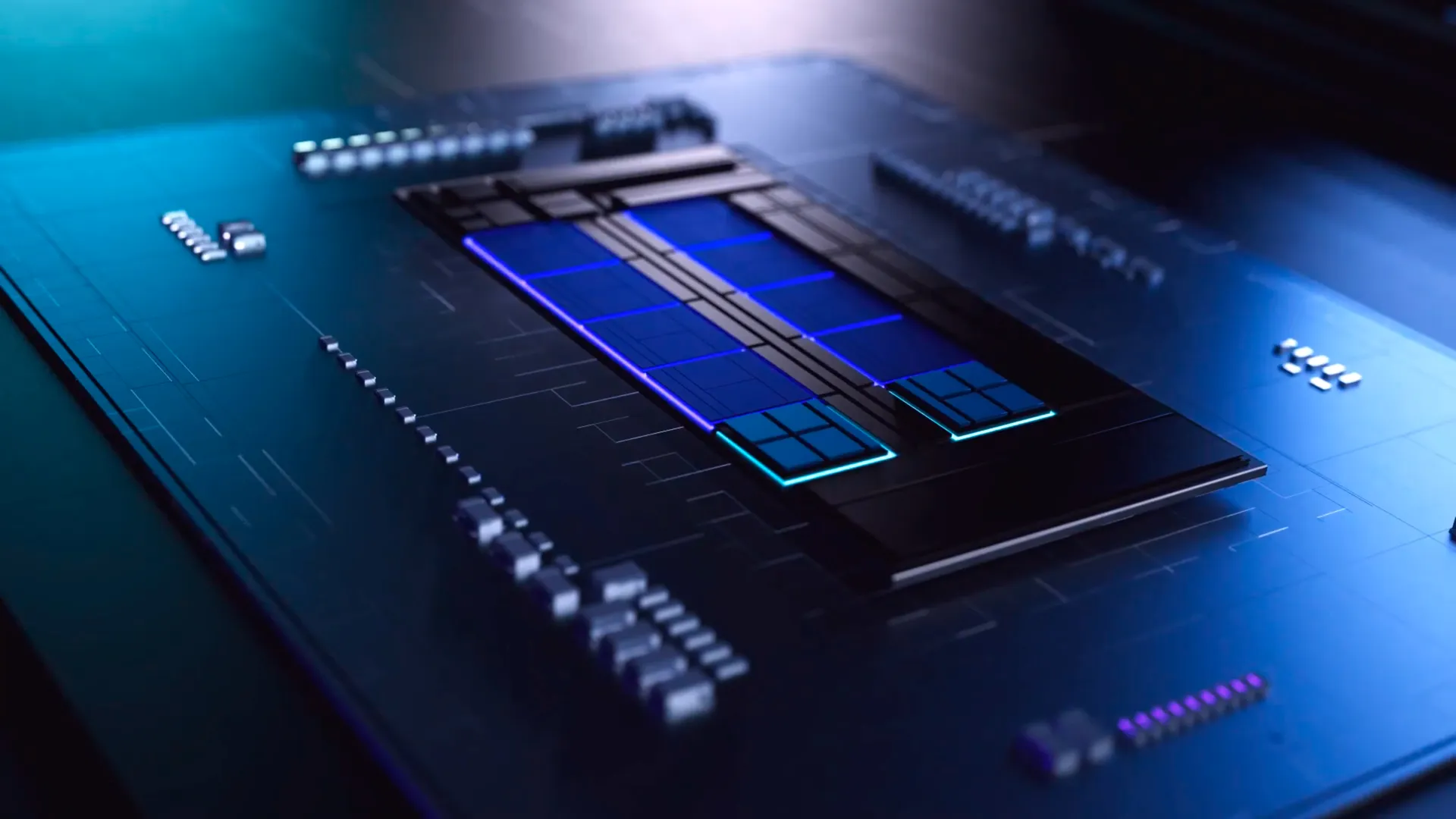
The Arrow Lake refresh expected in March is Intel's upcoming desktop family, but the chipmaker's true next-gen offering will be Nova Lake. Set to debut later this year, it should bring significant architectural improvements, including a bump to 52-core configs and the inclusion of big last-level cache (bLLC) that rivals AMD's X3D, according to rumors. Now, a new leak claims Intel is also planning to drastically increase the maximum power consumption of these chips to 700W.
The power consumption of a full-load NVL-K is over 700 watts.February 10, 2026
As a hard limit, PL4 isn't something you'd normally encounter, rather serving as a hard power limit in order to protect the processor when you remove power limits in your BIOS (such as when using the Intel Extreme performance profile). The outgoing Core Ultra 9 285K, based on existing Arrow Lake microarchitecture, has a max power limit of 490W. Pushing the chip to that point voluntarily is not a good idea unless you're into extreme overclocking.
Article continues belowIn worse case scenarios, the CPU can trigger a shutdown to protect the system, but it looks like Intel is designing Nova Lake to ride close to this ceiling anyway. We say that because another leaker, Jaykhin, says that Nova Lake won't allow you to offset TJMax, the maximum safe operating temperature, so you manually force the CPU into running hotter.
TJMax for Arrow Lake is 105 degrees, up from 100 degrees on Raptor Lake, so expect Nova Lake to be around this limit as well. Once TJMax is hit, your CPU starts to thermal throttle to cool itself down, and you also won't be able to disable that behavior in Nova Lake. The "NVL-S" designation in the tweet below refers to the Nova Lake desktop series as a whole.
NVL-S, preliminary (TJMax value).TJMax cannot be offset and thermal throttling cannot be disabled.The thermal sensor can report from -64C to 100C (TJMax) if Negative Temperature Reporting is enabled.February 9, 2026
Moreover, Jaykihn mentions how Nova Lake can even post without the performance cores, solely working on the standard or low-power efficiency cores. We already know this lineup will mark the debut of LP-E cores on desktop, and that they'll be clustered off into their own low-power island. So, now this apparently confirms that the silicon can clock-gate, blocking the clock signal to almost the entire compute complex to save power and run cooler when idling.
Nova Lake is said to come in two variants: a cut-down version with 28 cores on a single compute tile, and a maxed-out 52-core version split across two tiles. The latter would be a behemoth with 16 P-Cores, 32 E-cores, and 4 LP-E cores, bolstered by up to 288 MB of bLLC cache (128 MB per tile). This chip will go against whatever AMD prepares as the flagship for its pending Zen 6 desktop lineup. When you take all that into account, a 700W PL4 starts to make a lot more sense.
Although 700W sounds like a lot for a CPU, it's worth reiterating that PL4 serves as a hard power limit, and it's disabled out of the box. The more important numbers are PL1 and PL2, which represent sustained and burst power, respectively.
Previously, leaks have shown us that Nova Lake mobile might be limited to a single compute tile, and even before that, there were even rumors of an insane Strix Halo competitor called "Nova Lake-AX," which have since died down. We know that this family will debut on the new LGA 1954 socket, which is backwards compatible for CPU coolers with LGA 1851 support. That platform will bring 900-series motherboards with it, too, that are currently tipped to launch in late 2026.

Follow 3DTested on Google News, or add us as a preferred source, to get our latest news, analysis, & reviews in your feeds.