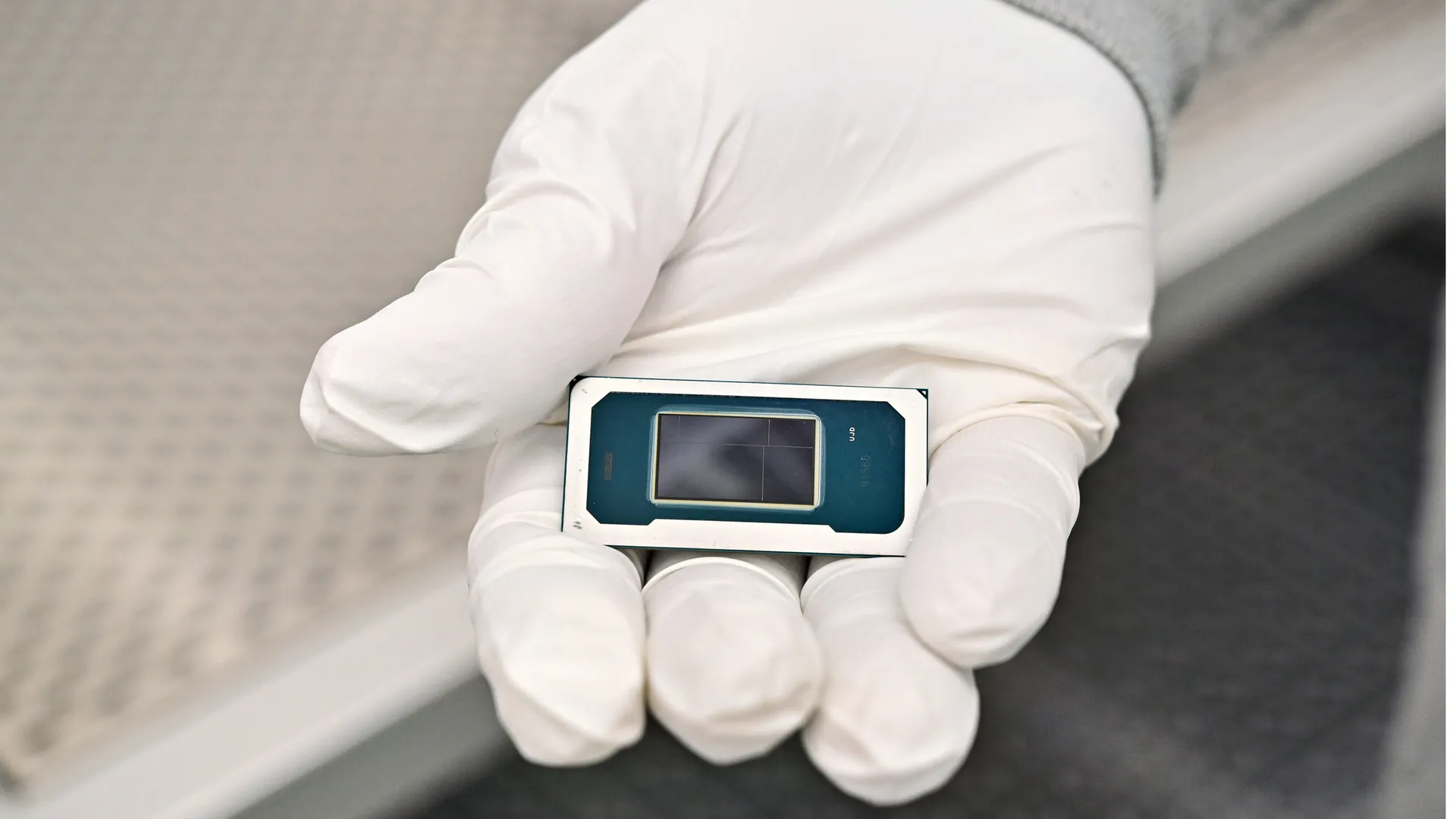
Intel is working on processors featuring the so-called 'Unified Cores' and these CPUs are at least three or four years away, or may be more, based on a new job listing that Intel posted over at LinkedIn. The company is looking for a senior CPU verification engineer who will verify silicon design of processors featuring Unified Cores while working with architects and RTL designers, which gives us an idea about the stage of the project.
"Intel's Unified Core team is looking to add a CPU functional verification engineer to their Silicon and Platform Engineering group," a statement at LinkedIn reads. "You will be part of the CPU functional verification team within SPE."

In very active development
Traditionally, verification engineers begin their work right after microarchitecture design is completed and before register transfer level (RTL) begins. However, given how complex modern processors are, functional correctness of a CPU logic blocks is not an isolated stage that happens after architecture is finished and before RTL begins. In modern processor development, verification is tightly linked with both architectural definition and RTL implementation. By the time RTL is written, verification engineers are already hard at work building models, defining coverage, and stress-testing assumptions embedded in the specification.
That said, validation does not wait for RTL to be 'complete' as it ramps up as soon as design intent is stable enough to encode into checks and coverage targets. Once RTL blocks start coming in, verification proceeds alongside implementation. Engineers run block-level simulations, use constrained-random testing, and perform system-level integration to continuously check that the RTL behaves exactly as defined by the architectural and microarchitectural specifications, so verification engineers must collaborate with both architects and RTL designers.
In any case, functional correctness is a continuous discipline that spans architecture modeling, RTL development, integration, and ultimately post-silicon validation — not a narrow checkpoint between two phases. Nonetheless, the fact that the engineer will have to work with both architects and RTL designers means the architecture is not fully frozen and the RTL is still evolving, so the whole project is somewhere in the middle of the cycle.
In a mature program approaching tape-out, verification engineers mostly interact with RTL designers to close coverage gaps and fix bugs and architecture changes at that point are rare and extremely expensive (to a large degree because they involve new RTL and new debugging/verification). By contrast, when verification is expected to work closely with architects, it suggests that microarchitectural features are still being refined, clarified, or adjusted as implementation progresses, which means that the project is in its early stages.
If our assumptions are correct, Intel is in the middle of the CPU development cycle and RTL implementation has not been completed, then the company is at least 18 to 24 months away from tape-out. Once Intel tapes out the first silicon featuring Unified Cores, it will be another 18 to 24 months for mass production of the product. That said, the most optimistic assumption is that Intel will be ready with its first product featuring Unified Cores in 2029, whereas a more realistic estimate is 2030. Keep in mind that since Intel does not clearly say where it is, we may be wrong by three to six months depending on various factors.
What is Unified Core?
It goes without saying that we still have little information about the nature of the Unified Core architecture or microarchitecture. While we can make our guesstimates about the stage of Intel's Unified Core project based on the job listing, we cannot do the same looking at the architecture.
The first leak about Intel's Unified Core emerged in mid-July 2025. @Silicon_Fly then speculated that Intel's Titan Lake processors due in 2028 would feature Unified Cores, not high-performance and energy-efficient cores, like today's Arrow Lake (Lion Cove P + Skymont E-cores) and Panther Lake (Cougar Cove P and Darkmont E-cores). Back then, the Unified Core was said to be an evolution of Intel's E-cores rather than P-cores. To launch a product in late 2028, Intel would need to tape it out by mid-2026 at the latest, so hiring verification engineers now would be rather late. Yet, if our estimates about Intel releasing first Unified Core-based products in 2029 – 2030 are correct, then making assumptions about their architectural decisions is a bit early.
Given the lack of information, Intel's Unified Core could be anything from an architecture containing many 'small' cores supporting the company's 'Software Defined Supercore' capability (we are speculating as this technology could be possibly 'attached' to a variety of microarchitectures) to AMD's modern approach to building hybrid CPUs (full-speed and compact Zen cores share the same microarchitecture, but differ in terms of performance and power consumption) to AMD's Hammer-like 'unification' to something completely different.
Given that Intel calls the project 'Unified Core,' it probably has a significant meaning for the company, suggesting that this might be a core design that is scalable for everything from an entry-level client PC CPU all the way to a heavy-duty datacenter processor. As to how such scalability could be implemented remains an open question, as there are numerous architectural approaches beyond those outlined above.

Follow 3DTested on Google News, or add us as a preferred source, to get our latest news, analysis, & reviews in your feeds.