Geekbench 6 is flagging inconsistent results
iBOT could be a game changer for Intel, but is proving to be a headache for benchmarking tools.
Receive 3DTested's top stories and detailed evaluations, delivered directly to your email.
You are now subscribed
Your newsletter sign-up was successful
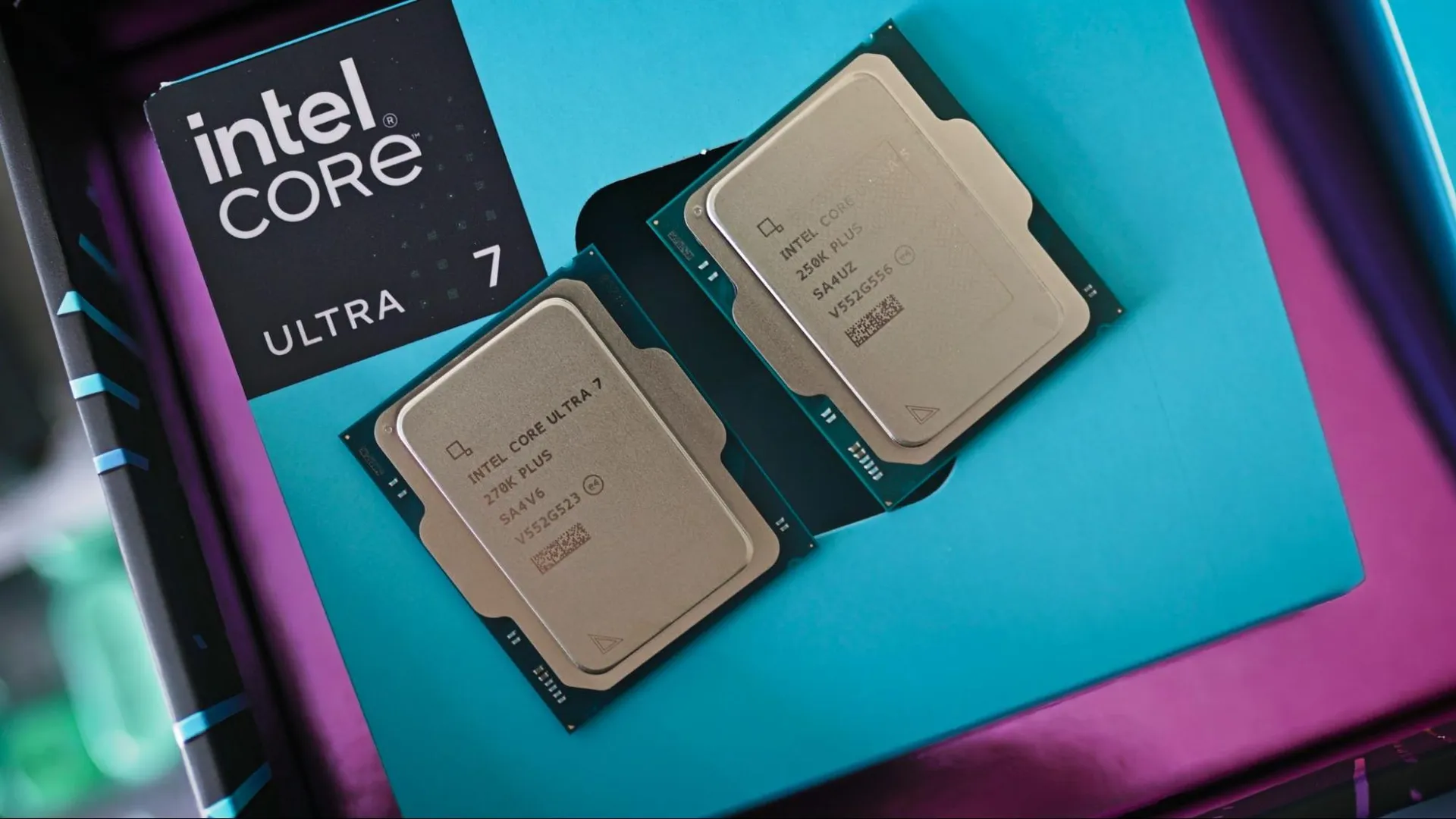
Among the most prominent enhancements Intel implemented in its newest Core Ultra 7 270K Plus and 250K Plus processors was the debut of its Binary Optimization Tool which modifies commands at the hardware level to increase IPC. This utility proves quite advantageous for extracting additional power from The Arrow Lake architecture, though it has prompted worries regarding benchmarking precision and reliability with these processors. John Poole from Geekbench posted a warning to its members that Intel's newest utility shouldn't be trusted at the moment, and there's no way to detect when the tool is active or inactive during a benchmark test.
Pool disclosed that Intel possesses no official public records regarding the methods the Binary Optimization Tool (or IBOT) employs for code enhancement, which complicates the assessment of how successful IBOT's strategies are when Utilized for a range of distinct uses. Additionally, this situation prevents Primate Labs (the creators of Geekbench) and its community of users from determining how IBOT improves results relative to benchmarks conducted without the tool. According to Poole, Geekbench 6 workload scores on the chips increase by up to 40% with iBOT enabled, with overall scores improving by up to 8%. "Since the tool modifies the benchmark, and it is unclear to both Primate Labs and the general public how these changes occur," he warned.
To deal with this problem, Geekbench will provide a warning on all Geekbench benchmark listings featuring iBOT-supported chips with the following description: “This benchmark result may be invalid due to binary modification tools that can run on this system.”
Article continues belowUnfortunately, the Geekbench developers don't have any other choice but to treat iBOT in this manner. Benchmarking consistency from run to run is very important for both users and the teams that create benchmarking apps, such as Geekbench 6, and losing this capability removes a benchmarking application's usefulness and credibility.
Fortunately, Intel recognizes these inconsistencies; Intel informed Jake Roach, a lead CPU reviewer and one of the editors at 3DTested's, that it is hesitant regarding launching the functionality and aims to prevent any accusations of playing Unethical tactics to appear superior on benchmark tests. At this time, IBOT is compatible with merely a small number of PC games, aside from Geekbench 6.3. Intel utilizes IBOT in Geekbench 6.3 as a demonstration of how IBOT could possibly operate across non-gaming scenarios. To illustrate, during our evaluation of the 270K Plus, we examined IBOT within Geekbench 6.3 and observed performance increase by nearly 10% relative to the 265K.
The Core Ultra 7 270K Plus and Core Ultra 5 250K Plus debuted this week as potentially Intel's last hurrah for the LGA 1851 platform before Nova Lake arrives later this year. In our reviews of both chips, we found both make significant improvements on the lackluster Core Ultra 200S series parts that preceded them. Pricing for both SKUs is substantially cheaper than their non-Plus counterparts, while providing noticeably superior multithreading performance thanks to the addition of four extra E cores.
Follow 3DTested on Google News, or add us as a preferred source, to obtain our newest reports, breakdowns, & appraisals via your feeds.

Receive 3DTested's top stories and detailed evaluations, delivered directly to your email.

-
Notton Alternate title: Geekbench 6 is a worthless benchmarking tool and no one should use it or listen to what they sayReply
