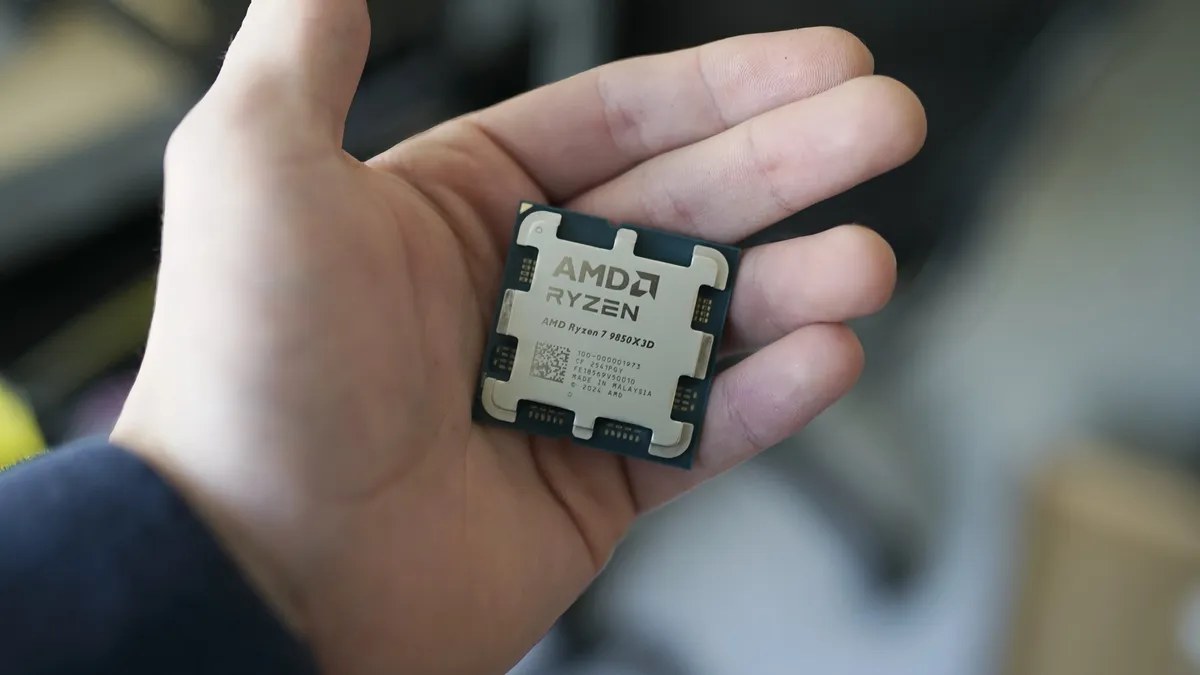
After teasing desktop Ryzen AI 400 processors at the beginning of the year, AMD has finally provided details on its new (but slim) desktop product stack. Previously known as “Gorgon Point,” the desktop range shares DNA with the Ryzen AI 400 mobile lineup, carrying the same Zen 5 CPU cores and RDNA 3.5 graphics with a focus on power efficiency over peak performance. AMD is offering two variations of the processors, one with the PRO designation for enterprise and another without it, but neither will be available as boxed retail units. At this time, they’ll only show up in OEM systems.
| Header Cell - Column 0 | Cores / Threads | Frequency (Base / Boost) | Cache (L2 + L3) | NPU TOPS | Graphics (CUs) | TDP |
|---|---|---|---|---|---|---|
Ryzen AI 7 450G / 450GE | 8 /16 | 2 GHz / 5.1 GHz | 24MB | 50 | Radeon 860M (8 CUs) | 65W / 35W |
Ryzen AI 5 440G / 440GE | 6 / 12 | 2 GHz / 4.8 GHz | 22MB | 50 | Radeon 840M (4 CUs) | 65W / 35W |
Ryzen AI 5 435G / 435GE | 6 / 12 | 2 GHz / 4.5 GHz | 14MB | 50 | Radeon 840M (4 CUs) | 65W / 35W |
AMD is using a 65W TDP for these chips, and the 35W versions are noted with an “E” suffix (i.e. Ryzen AI 7 450GE). Otherwise, the specs are identical, from the core counts and iGPU to the maximum boost clock speeds.
The differentiator compared to AMD’s other consumer chips is the 50 TOPS NPU, earning them Microsoft’s Copilot+ certification. The silicon here, including the NPU, GPU, and CPU, is identical to the mobile Ryzen AI 400 lineup. The 450 on desktop is identical to the 450 on mobile, short of the power limit and form factor. As with all Zen 5 chips, Ryzen AI 400 desktop CPUs slot into the AM5 socket.


Although the silicon is identical, AMD is only pushing out the bottom rung of its Gorgon Point lineup on desktop right now. On mobile, AMD climbs up to the Ryzen AI 9 HX 475, which features a 60 TOPS NPU, Radeon 890M graphics with 16 RDNA 3.5 CUs, and 12 cores that can boost up to 5.2 GHz.
AMD hasn’t made any performance claims about the desktop chips yet, which isn’t surprising given this is a new category of product for Team Red. Given that the thermal design is similar and the silicon is nearly identical, we expect to see slightly higher overall performance from the Ryzen AI 400 desktop offerings compared to their mobile counterparts. As we’ve seen with consumer chips like the Ryzen 7 9700X and Ryzen 5 9600X, Zen 5 is fairly efficient around 65W, with the optional 105W TDP mode offering only slightly higher performance for nearly double the power.
AMD will only offer these APUs in OEM systems for now. They come with Copilot+ certification, which calls for more than just an NPU. Critically, Copilot+ calls for at least 16GB of system memory, which is a variable AMD can’t control with boxed retail units. For now, AMD says commercial designs with these chips will be available in Q2 2026.


In total, AMD says it will have over 200 commercial designs available with its PRO chips, but that includes mobile offerings as well. Some of the OEMs AMD is working with include Acer, Asus, Dell, HP, and Lenovo. As you can see in the slide above, AMD is featuring smaller desktop designs, which is likely where we’ll see Ryzen AI 400 desktop chips in action.
| Header Cell - Column 0 | Cores / Threads | Frequency (Base / Boost) | Cache (L2 + L3) | NPU TOPS | Graphics (CUs) |
|---|---|---|---|---|---|
Ryzen AI 9 HX PRO 475 | 12 / 24 | 2 GHz / 5.2 GHz | 36MB | 60 | Radeon 890M (16 CUs) |
Ryzen AI 9 HX PRO 470 | 12 / 24 | 2 GHz / 5.2 GHz | 36MB | 55 | Radeon 890M (16 CUs) |
Ryzen AI 9 PRO 465 | 10 /20 | 2 GHz / 5 GHz | 34MB | 50 | Radeon 880M (12 CUs) |
Ryzen AI 7 PRO 450 | 8 / 16 | 2 GHz / 5.1 GHz | 24MB | 50 | Radeon 860M (8 CUs) |
Ryzen AI 5 PRO 440 | 6 / 12 | 2 GHz / 4.8 GHz | 22MB | 50 | Radeon 840M (4 CUs) |
Ryzen AI 5 PRO 435 | 6 / 12 | 2 GHz / 4.5 GHz | 14MB | 50 | Radeon 840M (4 CUs) |
In addition to desktop offerings, AMD is introducing its Ryzen AI PRO 400 series for mobile, which mirrors the consumer lineup in the product naming and specs, as you can see in the table above. With both the mobile and desktop offerings, the PRO validation is what sets these chips apart from AMD’s consumer lineup. AMD includes additional features, like a multi-layer security ecosystem and manageability for IT administrators.
We should see designs with these CPUs roll out shortly. We’ve asked AMD if we can expect the lineup to expand up to AMD’s 12-core Gorgon Point design that we see on mobile. We’ve also asked about the fate of the long-rumored Ryzen 9000G APU lineup, though we don’t expect much news on that front at this time.

Follow 3DTested on Google News, or add us as a preferred source, to get our latest news, analysis, & reviews in your feeds.