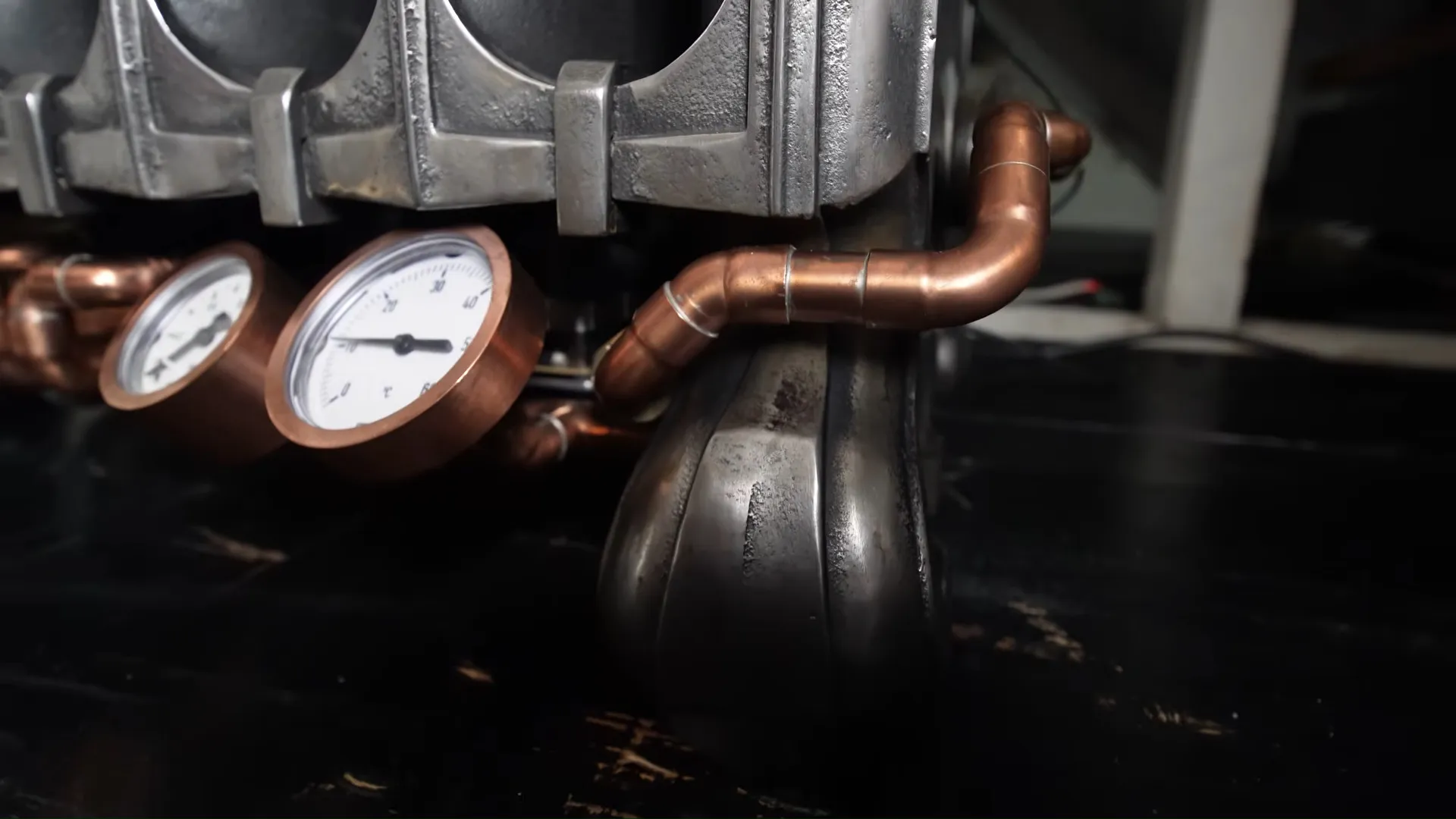
Billet Labs is back and has finalized its cast-iron Victorian radiator gaming PC build. Alex from the London-based PC cooling innovators shared a detailed hour-long video with insights into the build, which should answer all your what, why, and how queries. However, he thought that even for this impressive radiator-as-a-PC build, “cooling something like a 5090 is probably out of the question,” so an RTX 5080 and Ryzen 7 9800X3D combo were judged to be the sweet spot.

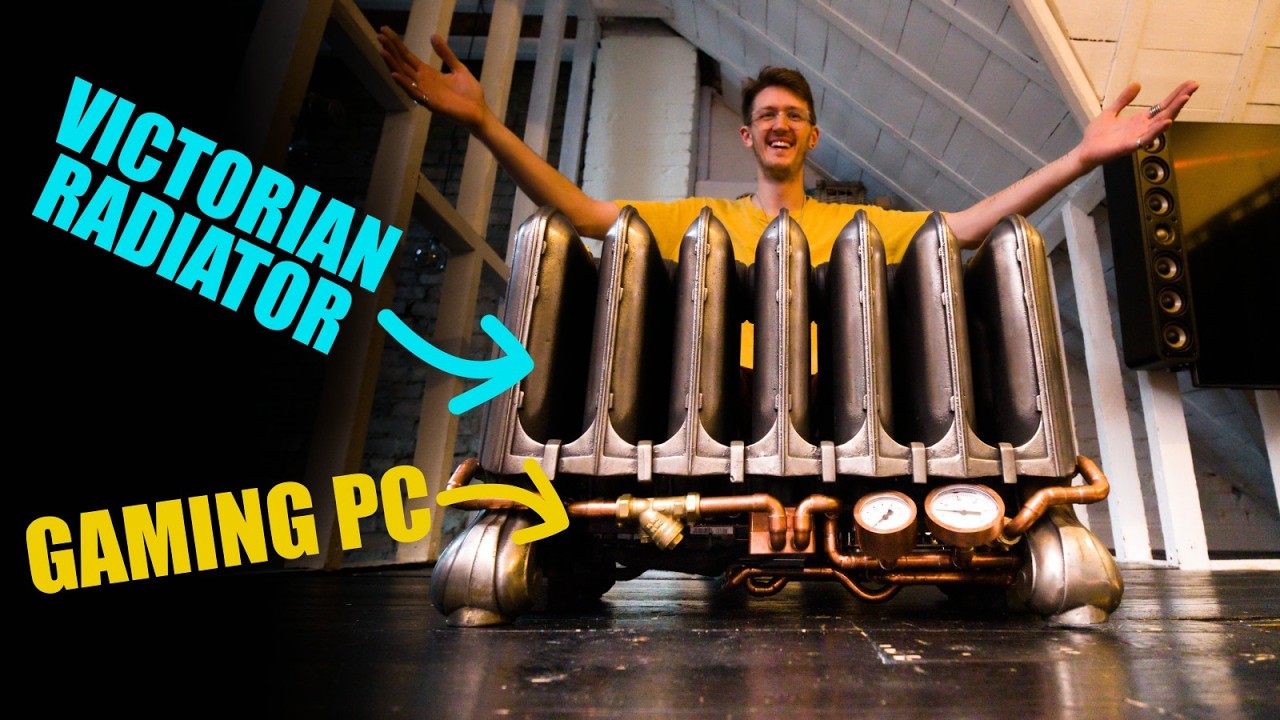
The video begins with Alex explaining that this amazing-looking PC is destined - not for some showroom or exhibition - but for an “actual usable long-term gaming PC, for myself.” Previously, we saw estimates that the charming but portly radiator was 110 pounds (~50kg) in weight. Now we have a clearer set of figures. The radiator is actually about 178 pounds (81kg) empty, and 218 pounds (99kg) when filled with coolant.
Commenting on this hulking mass of metal, “the thermal mass is absolutely insane,” enthused Alex. “And, secondly, it looks %^&* awesome!”
The key approach to the design and build was to keep the Victorian artifact’s visual appeal intact, and mount PC parts “as invisibly as possible, on the bottom.” But an immediate challenge to this idea was the fact that “there’s not a single flat surface, and not a single hole that I can bolt anything to,” wryly commented the PC liquid cooling specialist.
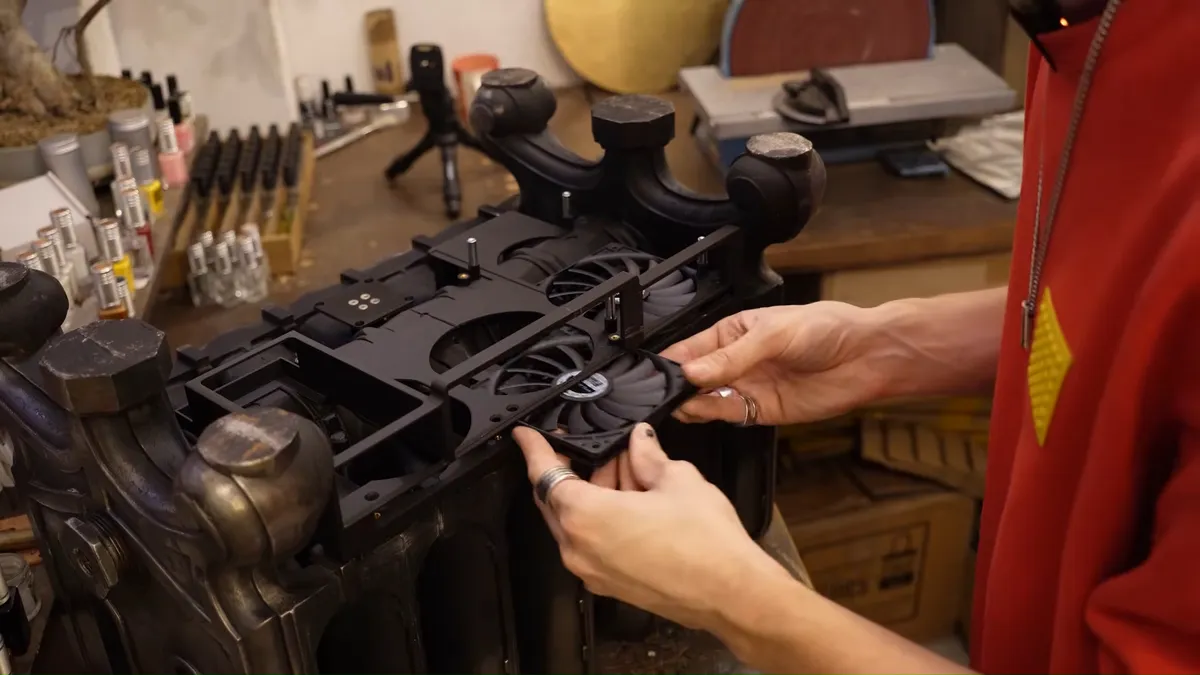
The first practical step in the build process was the 3D scanning of the bottom of the radiator to create an accurate 3D model. Armed with this, Felix designed a highly accurate 3D printed mounting system for PSU, mobo, GPU, and so on. This 2-part plastic chassis was fixed to the central underlying spine of the radiator, with corresponding half-pipe fixings securing it in place.
Though we had the impression this was going to be a fanless radiator system, the below-decks chassis design included room for sliding in a trio of super-thin 120mm fans.
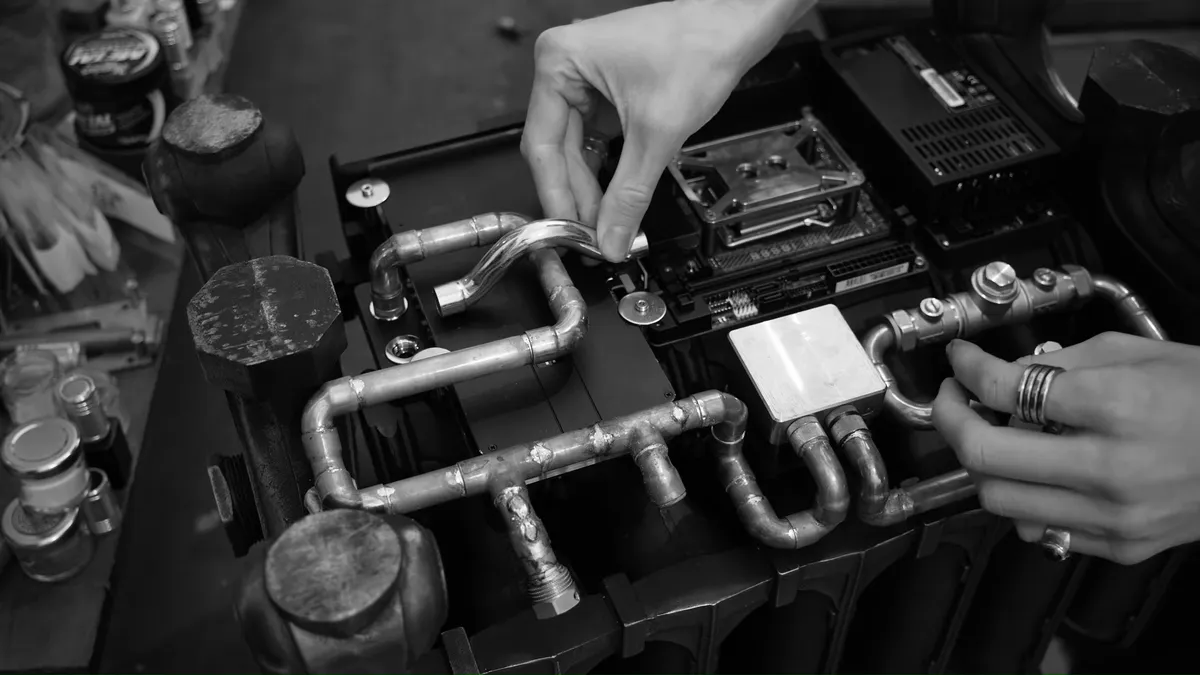
To mate the heat-generating components with the radiator and plumbing, Billet Labs chose an Alphacool water block for the RTX 5080, and its own prototype AM5 CPU cooling block.
On the topic of PC build components, the list was roughly as follows:
CPU | AMD Ryzen 7 9800X3D |
GPU | Nvidia GeForce RTX 5080 |
Motherboard | Gigabyte Aorus Pro B850i (Mini-ITX) |
PSU | Enhance ENP 7660L-VT 600W Platinum Flex ATX |
Cooling | Victorian radiator, oodles of copper pipe, pump, water blocks, trio of slim fans |
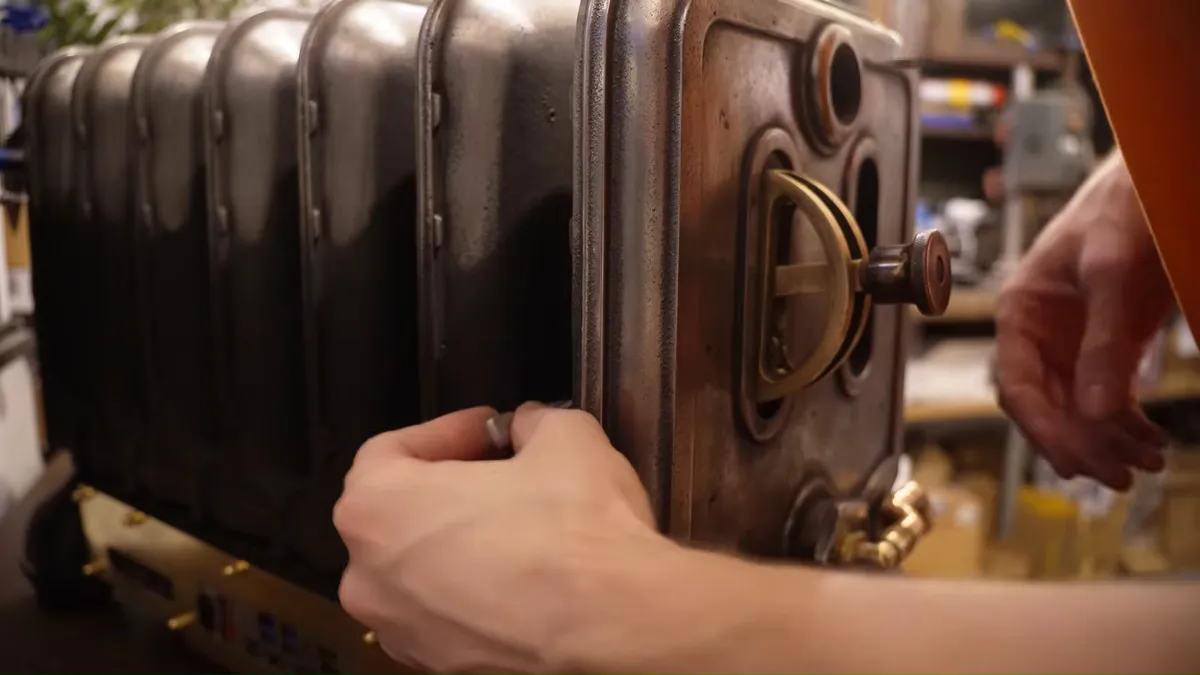
Another nice touch with this fantastic PC build project was the choice of the power button. Felix sourced a sprung antique brass gear lever to power up the PC stylishly. This was fitted into one of the side vents on the rad using a custom mount.
Before the end of the video, we see the antique cast-iron PC used for a bit of gaming and benchmarking. In a ‘torture test,’ drawing about 520W of power for over an hour, the water temperature appeared to stabilize at under 30C. Notably, the RTX 5080 peaked at 75 °C during the most extreme testing Alex could throw at it.
Finding an antique cast-iron radiator isn't that easy in 2026, but at least Amazon still sells some modern ones in various sizes.

Follow 3DTested on Google News, or add us as a preferred source, to get our latest news, analysis, & reviews in your feeds.